The process begins before you receive a single tray: your teeth, gums, bite and treatment goals must be assessed, then a staged plan is created and checked as treatment progresses. By the end, you will know what happens at each appointment, how to manage trays at home, when problems need professional advice, and why retainers remain part of the treatment.
Key takeaways
- Expect an examination of your teeth, gums, bite and jaw movement.
- Review the digital treatment plan before your first trays are made.
- Wear trays as directed and remove them for eating, drinking and cleaning.
- Plan for progress checks, refinements and retainers after the final tray.
What happens at the clear aligner consultation?
The first appointment decides whether aligners are sensible, not whether you can simply order trays. The clear aligner consultation process starts with your medical and dental history, treatment goal, and an examination of your teeth, gums, bite, jaw movement, fillings and signs of clenching.
Diagnostic records make the decision testable:
- Photographs document tooth position, gum contours and your smile.
- Radiographs show roots, bone levels, decay, impacted teeth and other hidden problems.
- A digital scan or physical impressions record the starting shape of your teeth.
- Bite records show how the upper and lower teeth meet.
Active decay, gum inflammation or poor hygiene needs attention before tooth movement begins. Moving teeth through unhealthy gums can worsen inflammation, increase sensitivity and compromise support.
The clinician then matches your proposed movements to what aligners can predictably achieve. Mild to moderate crowding, spacing and selected bite corrections often suit them; severe rotations, large movements and jaw-bone discrepancies may call for fixed braces, elastics, attachments, interproximal reduction, extractions or surgical care instead.
A digital 3-D preview shows a proposed sequence, not a guaranteed result. Ask how the clear aligner treatment for process accounts for less predictable movements, possible refinement trays and the risks of discomfort, speech changes, irritation, decay, gum problems and relapse.
You should leave knowing the alternatives, expected wearing time and why this plan fits your teeth and gums.
How are the treatment plan and first trays prepared?
After the examination, the clinician turns photographs, X-rays, bite records and a digital scan or impression into a staged plan. The software predicts how each tooth could move and produces a 3-D preview, but that preview is a proposal, not a guarantee of the final result.
The clear aligner treatment steps between diagnosis and your first trays usually include:
1. The clinician checks whether the planned movements suit aligners. Severe rotations, large movements, skeletal discrepancies and some root-control movements may need fixed braces, auxiliaries, gum treatment, restorative work, or combined orthodontic and surgical care.
2. The plan specifies the mechanics, not just the trays. It may include tooth-coloured composite attachments, controlled enamel removal between selected teeth called interproximal reduction, elastics, or extractions. Aligners alone do not perform every movement.
3. You review the proposed tooth positions, treatment limits and likely risks before approving fabrication. Ask what happens if a tooth does not track, because the first series is not guaranteed to be the final series.
4. A laboratory or manufacturer fabricates numbered trays from the approved prescription. Each tray applies small programmed changes, so the sequence matters.
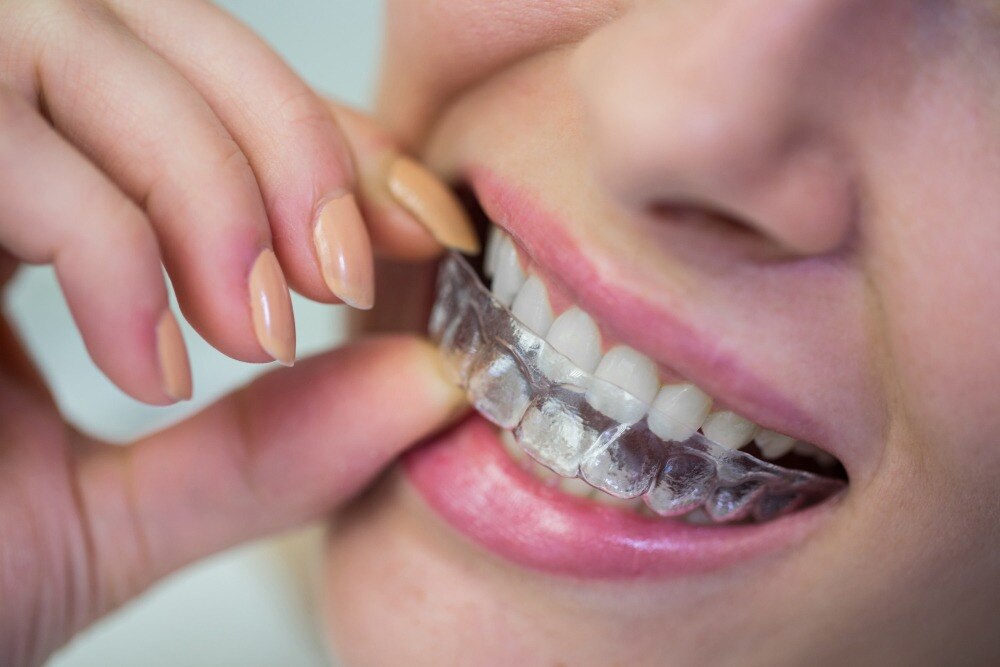
5. At fitting, the clinician checks seating, edges and bite, then explains insertion, removal and wear. Most protocols require about 20–22 hours daily, with removal for meals, drinks other than water, brushing and flossing. Wearing trays only at night can reduce tracking and extend treatment.
What should you expect when wearing and changing trays?
Wear each tray for about 20–22 hours daily, removing it for meals, anything other than water, and brushing and flossing. Wearing aligners only at night can reduce tracking and lengthen treatment.
What to expect with clear aligners includes firm pressure after a change, increased saliva, and a temporary speech change; these sensations usually settle within a few days.
Keep both your teeth and trays clean. Use a soft toothbrush and fluoride toothpaste on your teeth, then rinse the aligner with cool or lukewarm water and clean it with a soft brush and mild liquid soap.
Avoid hot water, which can distort the plastic, and avoid leaving sugary or acidic drinks trapped beneath it; water is the safest drink while trays are fitted.
- Remove the tray by loosening both back edges, then lift it evenly rather than twisting one corner.
- Store it in its ventilated case during meals or brushing, not in a tissue where it can be thrown away.
- Insert the next tray only on the prescribed change date. Do not shorten the interval because the current tray feels loose or comfortable.
| Sensation | Usually expected | Contact your clinician when |
|---|---|---|
| Pressure or tightness | Strongest after changing trays | Pain remains severe or worsens |
| Slight rubbing | A brief tender spot on the cheek or gum | A sharp edge causes a sore or ulcer |
| Mild speech change | Improves as you practise speaking | Speech remains significantly affected |
How are progress, problems and refinements handled?
At each follow-up, the clinician decides whether to continue, correct a problem, or rescan for refinement by comparing your teeth with the digital plan. A routine review checks:
- Gum and tooth health
- Attachment condition
- Bite changes
- Whether the teeth are tracking as planned
When tracking is good, you receive approval to continue changing trays in sequence. The clinician may also check that you are wearing aligners for about 20–22 hours daily; wearing them only at night can slow movement and extend treatment.
Do not move to the next tray if an aligner suddenly feels loose, tight, or will not seat fully. The clinician will look for:
- Missed wear
- A loose or missing attachment
- A lost or damaged aligner
- Tooth movement that is not tracking
The response may be to extend the current tray, replace it, add or repair an attachment, or rescan your teeth. For clear aligner treatment in Dwarka, ask Dr Pooja Dental & Implant Centre what to do with the current tray before improvising.
The first series is not always the final series. If teeth remain out of position, the bite needs adjustment, or small finishing movements are incomplete, the clinician takes new scans and orders refinement aligners with a revised sequence.
These extra trays are part of the clear aligners treatment steps, not proof that the original plan failed.
Related service
Clear Aligners Straighten your teeth without the “metal-mouth” look! At Dr. Pooja Dental & Implant Centre, we provide state-of-the-art Clear Aligner therapy—the... View service → |
What happens after the last planned tray?
The last planned tray does not automatically mark completion. At the final review, your clinician checks tooth positions, the bite, gum health and the fit of the result against the approved plan. If a tooth has not tracked, the bite needs adjustment or small finishing movements remain, further scans and refinement aligners may be prescribed.
Knowing what to expect with clear aligners at this stage means preparing for a change from active movement to retention:
- Your clinician records the final position with photographs, a scan or impressions, and a bite assessment.
- Removable retainers are made to hold the teeth in those positions. Wear them exactly as prescribed; do not shorten the schedule because the teeth feel stable.
- A fixed bonded retainer may be attached behind selected teeth when extra support is useful. It needs cleaning and checks because a loose wire can allow movement or irritate the gum.
The clear aligner treatment process ends when the clinician confirms the planned result and provides retention, not when you simply finish the box of trays. Teeth remain surrounded by living bone and periodontal tissues that adapt over time, so relapse can occur months or years later.
Retention is usually a continuing, often lifelong maintenance phase. Attend long-term reviews at the recommended intervals so the retainer fit, bonded wire, bite and gum health can be checked. Contact the clinic promptly if a retainer cracks, stops fitting or a tooth begins to shift.
Frequently asked questions
What happens during a clear aligner consultation?
Your dentist reviews your medical and dental history, treatment goal, teeth, gums, bite, jaw movement, fillings and signs of clenching before deciding whether aligners suit you.
How are the first clear aligner trays prepared?
Your dentist records your teeth and bite, creates a digital treatment plan and reviews the planned tooth movements before the aligners are manufactured.
What should you expect when wearing and changing clear aligner trays?
Wear each tray for the schedule provided, remove it for meals and drinks other than water, clean your teeth and trays, and change trays only as instructed.
What happens after the last planned clear aligner tray?
Your dentist checks the final tooth positions, discusses refinements if movements remain incomplete and provides retainers to help maintain the result.
Keywords