A workplace dental problem can range from a loose filling that can wait until your shift ends to a knocked-out tooth or facial injury that needs immediate treatment. You will learn how to triage the problem, give safe first aid, contact an emergency dentist, manage workplace logistics, and understand what the first appointment can realistically accomplish.
Key takeaways
- Seek immediate care for a knocked-out, displaced, or severely broken tooth.
- Keep a knocked-out tooth moist in milk or saliva; never scrub the root.
- Call an emergency dentist before leaving work to confirm same-day availability.
- Follow-up checks protect injured teeth after pain and swelling improve.
Which workplace dental problems need immediate care?
Do not wait until the end of a shift if a tooth has been knocked out, displaced, or broken with severe pain or visible pulp. An emergency dentist for dental problems at work can protect the tooth quickly, while a hospital is needed when the injury threatens breathing, the jaw, or the head.
| Option | What it means | When it applies |
|---|---|---|
| Same-hour dental care | Contact an emergency dentist immediately | Knocked-out or partially displaced permanent tooth, severe or rapidly worsening toothache, dental abscess with facial swelling, exposed pulp, broken tooth, deep lip or gum cut, or bleeding that will not settle with firm gauze pressure |
| Hospital or emergency medical services | Treat the wider injury before or alongside dental damage | Difficulty breathing or swallowing, swelling around the eye or neck, suspected jaw fracture, major facial injury, loss of consciousness, vomiting, neurological symptoms, or uncontrolled bleeding |
| Appointment after work | Arrange routine dental assessment if symptoms are stable | Lost filling or crown without severe pain, a small chip with no sharp edge, or mild toothache without swelling, fever, or worsening symptoms |
For a knocked-out permanent tooth, hold it by the crown, rinse visible dirt briefly without scrubbing the root, and replant it if you can do so safely. Otherwise place it in milk or a tooth-preservation solution and seek urgent dental care. Do not let it dry.
Urgent dental care during work is not replaced by a first-aid kit: gauze controls bleeding temporarily, but cannot identify a root fracture, jaw injury, or pulp exposure. Call emergency medical services after a substantial blow when head-injury symptoms or airway problems are present.
What should you do before leaving the workplace?
Use the first few minutes to protect the tooth and control immediate damage, but do not let workplace first aid replace professional assessment. Call a dentist for workplace tooth injury promptly, and use emergency services for breathing or swallowing difficulty, loss of consciousness, major facial trauma, uncontrolled bleeding, or suspected jaw fracture.
1. Sit upright and press clean gauze against a bleeding gum or cut for 10 to 15 minutes without repeatedly lifting it to check. If blood continues heavily, seek emergency medical help.
2. For a knocked-out permanent tooth, hold it only by the crown, briefly rinse visible dirt without scrubbing the root, and gently replant it if you can do so safely. Otherwise place it in milk or a specialist tooth-preservation solution; never let it dry or wrap it in tissue.
3. Save any broken tooth piece or dislodged filling in a clean container. Do not glue a crown back or push a displaced tooth into position.
4. Wrap a cold pack in cloth and apply it to the cheek for 15 minutes at a time, with breaks between applications. Do not place ice directly on skin or gum tissue.
5. Avoid aspirin on the gum, which can cause a chemical burn. Record the time, impact, symptoms, witnesses, first aid, and recovered tooth material, then report the injury through your employer’s accident process without delaying care.
How should you arrange dental treatment during a shift?
Call an emergency dentist for workers as soon as the injury occurs; use the clinic’s phone number rather than waiting for an email response. State that you need urgent dental care during work, describe the injury, and ask whether to attend immediately, a hospital, or another service.
Tell the dentist:
- What happened, including the time and force of the impact
- Which tooth or area is affected, and whether a permanent tooth was knocked out, moved, cracked, or lost
- Bleeding, swelling, severe pain, numbness, breathing or swallowing difficulty
- Whether you have a tooth fragment, crown, filling, or knocked-out tooth
- What first aid you provided and whether you struck your head or lost consciousness
Notify your supervisor or occupational-health contact while the dental call is being made. Report the time, mechanism, symptoms, witnesses, first aid, and damaged tooth through the workplace accident process; documentation supports an occupational-injury claim, but paperwork must not postpone treatment.
Ask the supervisor to arrange a taxi, colleague, workplace vehicle, or ambulance based on the dentist’s advice. Do not drive yourself after a head impact, faintness, medication that causes drowsiness, severe pain, or vision problems.
Call emergency medical services for difficulty breathing or swallowing, uncontrolled bleeding, loss of consciousness, neurological symptoms, major facial injury, or suspected jaw fracture. Take identification, medication details, and the tooth in milk or tooth-preservation solution if advised.
What will an emergency dentist do at the first visit?
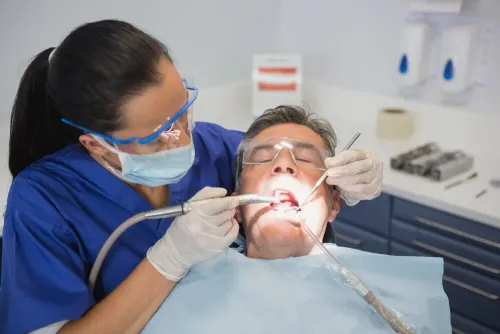
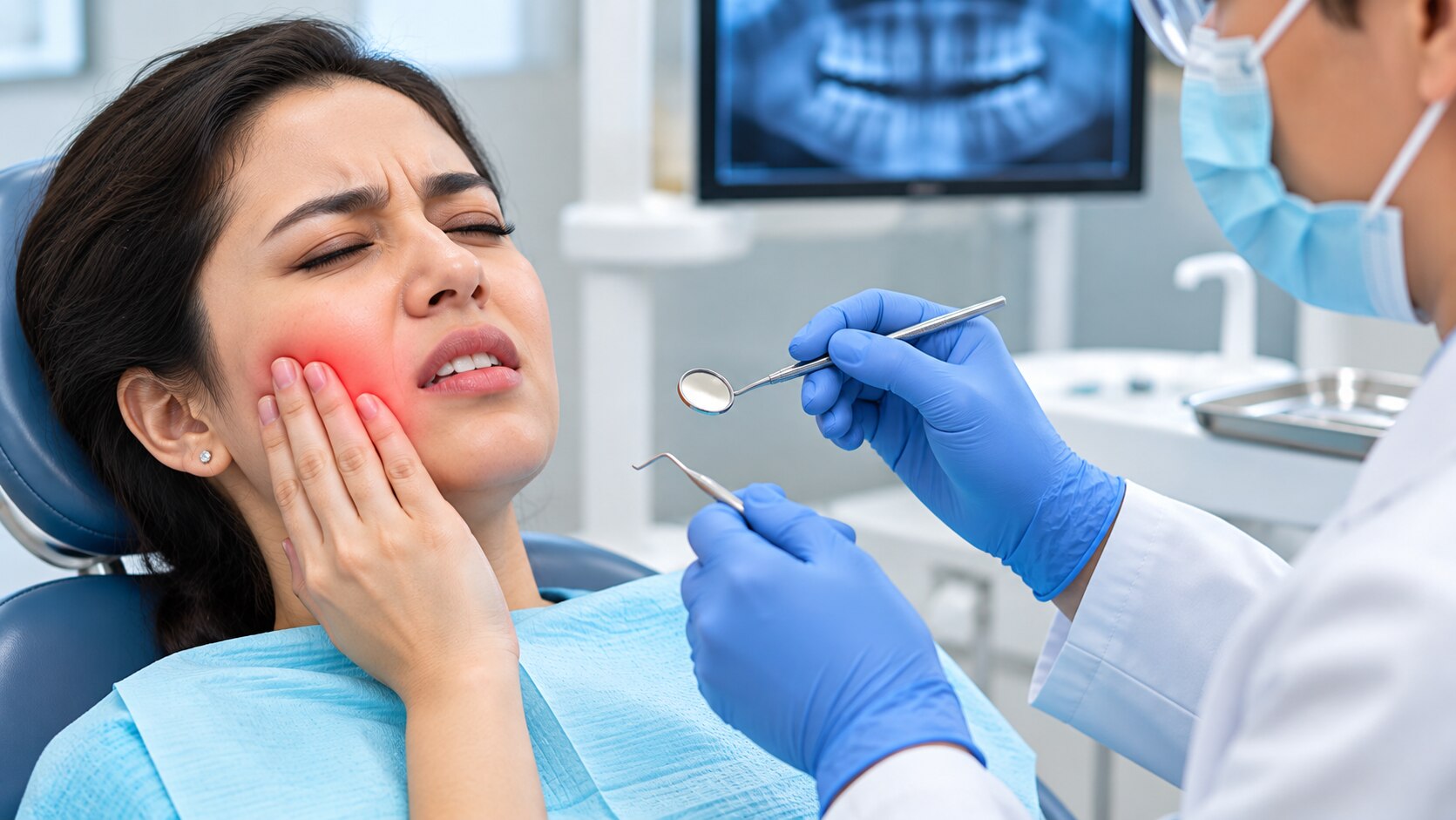
At the first visit, the dentist identifies what must be treated now and what can wait. A dentist for workplace tooth injury will record how the accident happened, check your bite, inspect teeth and gums, test mobility and pulp sensibility, and look for cuts, swelling, displacement, or jaw tenderness.
Expect these steps:
- Imaging: a periapical radiograph can show a root fracture, displaced tooth, or bone injury; a panoramic scan may be needed when jaw trauma is suspected.
- Stabilisation: the dentist may smooth a sharp edge, place temporary filling material, cover exposed pulp, reposition a moved tooth, or apply a flexible splint.
- Pain control: local anaesthetic helps during treatment. The dentist will recommend suitable pain medicine and explain what to avoid.
- Referral: suspected jaw fracture, major facial wound, head injury, loss of consciousness, vomiting, neurological symptoms, or breathing difficulty require hospital or emergency-service assessment.
- Documentation: request copies of radiographs, clinical notes, and the treatment plan for your employer’s accident or occupational-health record.
The number of visits depends on the injury and the temporary treatment used.
| Problem | Likely dental visits |
|---|---|
| Knocked-out or displaced tooth | Same-day repositioning, splint checks, and several reviews |
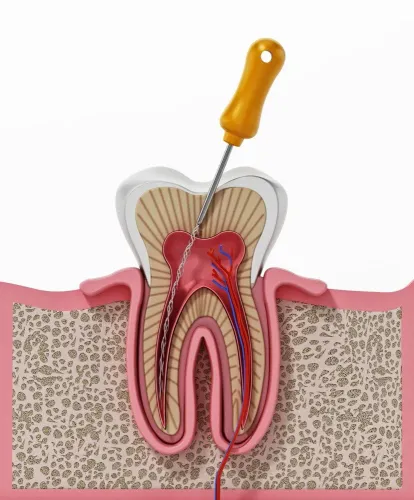
| Broken tooth with pulp exposure | One stabilisation visit, followed by root canal and restoration visits |
| Lost filling or crown | One replacement visit if the tooth is otherwise sound |
| Severe toothache or abscess | One urgent visit, then review or root canal treatment |
An emergency dentist for workers, including Dr Pooja Dental & Implant Centre, can help decide whether stabilisation is enough or referral is safer.
Related service
Emergency Dentistry Dental emergencies can be frightening and painful, often happening when you least expect them. At Dr. View service → |
Why can a workplace tooth injury need follow-up after pain improves?
Pain relief does not prove that an injured tooth has healed. Trauma can damage the pulp, root, periodontal ligament, or surrounding bone without causing continuing pain, and a temporary filling, crown, or splint only stabilises the problem until definitive treatment.
Attend the review arranged after urgent dental care during work, even if you feel normal. The dentist may check tooth vitality, mobility, bite, gum healing, X-rays, and the condition of a flexible splint. Missing that appointment can allow a dead pulp to become infected or a displaced tooth to fuse incorrectly to the bone.
A workplace first-aid kit cannot detect these complications.
Contact an emergency dentist for dental problems at work again if you notice:
- Tooth darkening, renewed sensitivity, pain when biting, or pain that returns after improving
- Increasing looseness, a changed bite, or a tooth that shifts position
- Gum swelling, a pimple or drainage beside the tooth, bad taste, fever, or facial swelling
- A loose splint, lost temporary filling or crown, exposed sharp edge, or worsening cut
- Numbness, persistent jaw pain, difficulty opening the mouth, or symptoms after a head or facial blow
A knocked-out or partly displaced tooth needs particularly careful follow-up because the pulp and supporting tissues can die or resorb later. Seek renewed attention promptly rather than waiting for severe pain.
Frequently asked questions
Which workplace dental problems need immediate care?
Seek urgent dental care for a knocked-out or displaced tooth, a severe fracture with visible pulp, uncontrolled bleeding, facial swelling, or intense pain. Go to a hospital when the injury affects breathing, the jaw, or the head.
What should you do before leaving the workplace?
Rinse your mouth gently, control bleeding with clean gauze, and save any broken or knocked-out tooth. Hold a knocked-out tooth by the crown, not the root, and keep it moist in milk or saliva.
How should you arrange dental treatment during a shift?
Call an emergency dentist for workers, explain the injury and symptoms, confirm same-day availability, and tell your supervisor you need urgent dental care during work.
Why can a workplace tooth injury need follow-up after pain improves?
Pain can fade while the pulp, root, or supporting bone remains damaged. Follow-up lets the dentist check healing, infection, tooth stability, and the need for further treatment.
Keywords