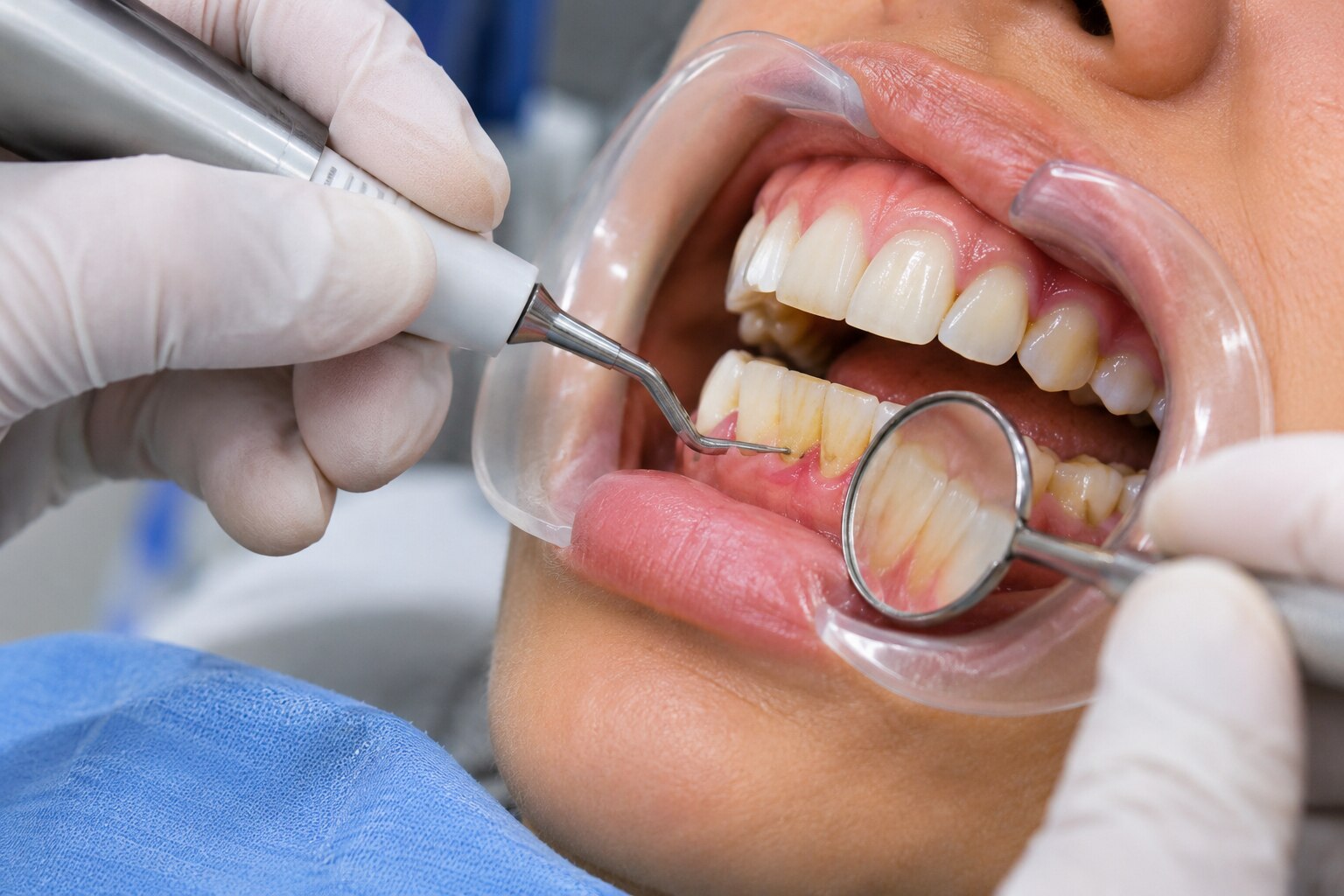
Smoking does not automatically rule out scaling and root planing, but it can make gum disease harder to detect, healing slower and the result less predictable. You will learn how a dentist decides whether deep cleaning is appropriate, what to expect during recovery and which smoking-related steps protect the result.
Key takeaways
- Smoking does not automatically rule out scaling and root planing.
- Periodontitis, not staining alone, determines whether SRP is needed.
- Expect gum measurements, multiple visits, and reassessment after healing.
- Stopping smoking improves healing and reduces the risk of recurrent gum disease.
Does smoking make scaling and root planing unsuitable?
Scaling and root planing is appropriate when a periodontal examination confirms periodontitis with plaque or calculus below the gumline. Smoking is not, by itself, a contraindication, but it makes an ideal response less likely and raises the risk of residual disease and recurrence.
Smoking affects treatment through several mechanisms:
- It reduces blood flow to gum tissues.
- It alters the immune response that controls periodontal bacteria.
- It impairs healing after root-surface debridement.
- It can suppress gum bleeding, so advanced disease may exist without the bleeding or pain you expect.
Stopping completely gives you the best healing prospects. Continuing to smoke does not make SRP pointless, but it makes plaque control, maintenance visits and periodontal reassessment more important. Do not accept a fixed “deep-cleaning” package without a diagnosis based on pocket measurements, bleeding findings, attachment loss and dental X-rays.
Smoking and gum disease treatment in Delhi should include tobacco-cessation support alongside periodontal treatment. Ask for counselling, follow-up and discussion of approved cessation medicines when appropriate. Delhi does not change the biological indication for SRP: the decision depends on your periodontal findings and smoking exposure.
For scaling and root planing for smokers in Delhi, the practical rule is simple—treat confirmed periodontitis, address tobacco use, and monitor healing rather than promise a one-visit cure.
How a dentist decides between routine cleaning and SRP
A dentist decides between routine cleaning and SRP after a periodontal examination, not from a fixed package labelled deep cleaning for smokers in delhi.
1. Record periodontal pocket depths, bleeding on probing, clinical attachment loss, gum recession, tooth mobility, and visible plaque or calculus. A smoker’s gums may bleed less because tobacco suppresses the vascular response, so no bleeding does not prove healthy gums.
2. Take appropriate dental X-rays when indicated. They reveal bone loss that a mirror examination cannot show, and the assessment should check furcation involvement, where disease reaches the roots of a multi-rooted tooth.
3. Separate gingivitis from periodontitis. Gingivitis means inflamed gums without attachment or bone loss and may improve with routine scaling and polishing plus better plaque control. Periodontitis involves attachment loss, deeper pockets, or radiographic bone loss and can require SRP to remove subgingival plaque and calculus.
4. Treat a fixed deep-cleaning package as a service description, not a diagnosis. Before agreeing to gum treatment for smokers in delhi, ask for the periodontal findings and the reason SRP is recommended for each affected area.
5. Pus, mobile teeth, severe bone loss, or persistent deep pockets can change the plan. After initial non-surgical treatment, you may need periodontal referral, surgery, or extraction planning rather than repeated routine cleaning.
What happens during a smoker’s SRP course
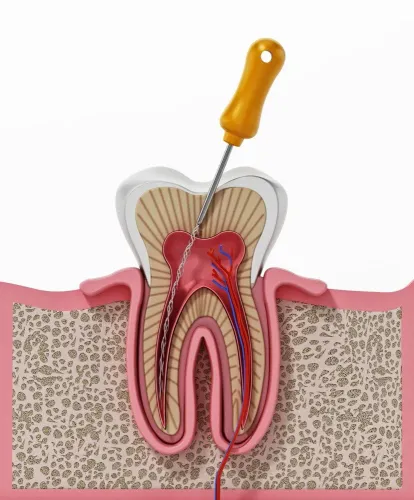
Routine scaling and polishing removes plaque and calculus from visible tooth surfaces; it does not clean infected areas beneath the gums. SRP reaches below the gumline and debrides contaminated root surfaces, which is why scaling and root planing for smokers in Delhi differs from a cosmetic cleaning or packaged deep cleaning for smokers in Delhi.
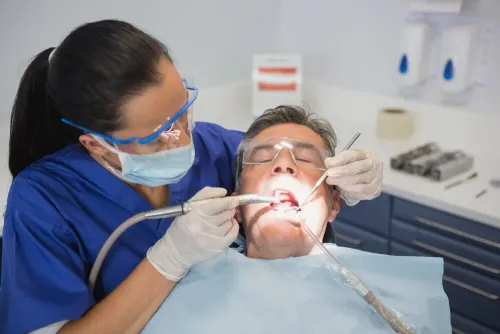
Your dentist may divide treatment by quadrants or complete it in full-mouth visits. Local anaesthetic helps when pockets are deep or teeth are sensitive. Appointment length depends on the number of teeth treated, deposit levels and disease severity, so no single duration applies to every smoker.
Expect tender gums, cold sensitivity, temporary discomfort while chewing and soreness when brushing treated areas.
Protect the treated tissues after each appointment:
- Do not smoke immediately after SRP. Heat and chemicals can irritate instrumented tissues and interfere with early healing.
- Ask the treating dentist for the exact no-smoking interval. Aim for at least 24 to 48 hours after each visit, and stop for longer whenever possible.
- Avoid forceful brushing. Follow the clinic’s instructions for brushing, interdental cleaning and any prescribed rinse.
- Contact the clinic if swelling persists, pain becomes severe or bleeding does not come under control.
Smoking does not make post-treatment discomfort proof that SRP failed, but it can make healing less predictable. A review after initial healing determines whether deep pockets or inflammation remain.
How to judge whether SRP has worked
Do not judge SRP on the day of treatment. As inflammation settles, gums can shrink and bleeding can reduce, while previously hidden root surfaces become exposed. Teeth may then look longer and develop temporary or lasting cold sensitivity. These changes do not automatically mean SRP damaged the gums.
Reassessment usually takes place after initial healing, around 4 to 8 weeks. A useful review follows this procedure:
1. Compare new pocket-depth readings with the original chart. Record bleeding on probing, clinical attachment measurements and tooth mobility; take radiographs when bone levels or another problem needs clarification.
2. Investigate sites that still have deep pockets, inflammation or furcation involvement. They may need additional instrumentation, periodontal referral or surgery. SRP cannot reliably rebuild lost bone or replace a missing tooth.
3. Set the maintenance interval from risk, not convenience. Continued smoking, poor plaque control, diabetes, severe starting disease and residual pockets increase recurrence risk and can justify supportive periodontal care about every 3 to 6 months.
For smoking and gum disease treatment in Delhi, improvement is less predictable when tobacco use continues. Antibiotics are not routine simply because someone smokes; prescribe them only when the clinical presentation supports their use.
The same applies to gum treatment for smokers in Delhi: a quieter-looking gumline does not prove that disease has resolved, particularly when smoking has reduced visible bleeding.
Choosing a Delhi clinic and protecting the long-term result
Choose a Delhi clinic that diagnoses periodontitis before offering deep cleaning. For gum treatment for smokers in Delhi, compare the assessment, treatment plan and follow-up—not a fixed package price.
| Option | What it means | When it applies |
|---|---|---|
| Routine scaling | Removes visible plaque and calculus | Gingivitis without attachment or bone loss |
| SRP | Cleans below the gumline and debrides root surfaces | Periodontitis with pockets, attachment loss or bone loss |
Ask the clinic:
- Will I receive a written periodontal chart showing pocket measurements, bleeding findings, recession, tooth mobility and furcation involvement?
- Which sites show bone loss, and do the X-rays show its extent?
- Is the proposal routine scaling or SRP, how many visits are planned, and what local anaesthetic will be used?
- When will reassessment occur, and which measurements will be repeated?
- What smoking-cessation plan is available: counselling, referral or discussion of approved cessation medicines when appropriate?
Dr Pooja Dental & Implant Centre is a local option for someone who wants the periodontal assessment, treatment plan and review explained before agreeing to deep cleaning for smokers in Delhi. SRP is not a guaranteed cure if tobacco exposure and plaque control continue.
If implants are being considered, address active periodontal infection and tobacco use first. Smoking increases implant failure and peri-implant disease risk. SRP is suitable when examination confirms periodontitis, but stopping tobacco and attending maintenance are part of treatment, not optional extras.
Related service
Full Mouth Rehabilitation A Full Mouth Rehabilitation (FMR) is one of the most comprehensive and transformative treatments we offer at Dr. Pooja Dental & Implant Centre. View service → |
Frequently asked questions
Does smoking make scaling and root planing unsuitable?
No. Smoking is not by itself a contraindication, but it increases the risk of residual disease, slower healing, and recurrence.
How does a dentist choose between routine cleaning and SRP?
A dentist uses periodontal probing, bleeding findings, gum recession, tooth mobility, X-rays, and the location of plaque or calculus to distinguish gingivitis from periodontitis.
What happens during a smoker’s SRP course?
The dentist removes plaque and calculus below the gumline, smooths root surfaces, controls discomfort with local anaesthetic when needed, and schedules reassessment after healing.
How can you tell whether SRP has worked?
Improvement is assessed through reduced bleeding, shallower periodontal pockets, less inflammation, cleaner root surfaces, and stable gum and bone findings at follow-up.
Keywords