The right choice depends on the condition of each tooth, not simply on the shade or uniformity you want in wedding photographs. By the end, you will know which problems suit veneers, when crowns are safer, when neither is appropriate, and how much time to leave for diagnosis, laboratory work, healing and adjustments.
Key takeaways
- Choose by remaining tooth structure, not wedding-day shade.
- Use veneers for suitable front surfaces; use crowns when broader protection is needed.
- Ask for a tooth-by-tooth plan covering material, preparation, and alternatives.
- Schedule testing and possible remakes before your wedding events.
Start with tooth structure, not your wedding-day shade
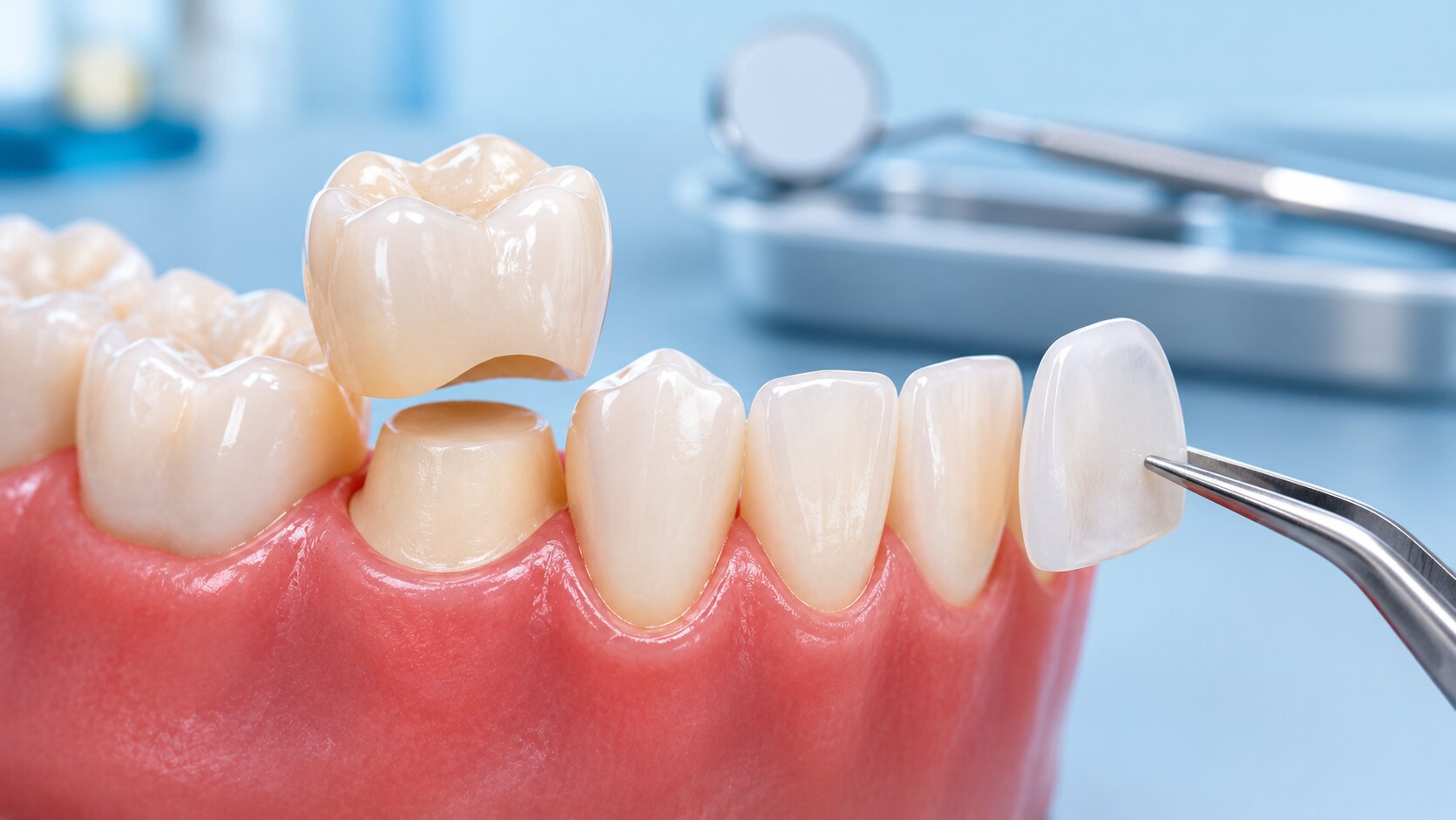
Start with how much healthy tooth remains: crowns or veneers before wedding in Delhi is not a shade-first decision. A veneer covers mainly the visible front surface; a crown covers the entire visible portion of the tooth.
| Option | Coverage and preparation | Strength and appearance | Reversibility, lifespan and maintenance |
|---|---|---|---|
| Veneer | Usually requires removal of some enamel from the front; ask how many millimetres will be removed. | Suits colour, small chips, shape changes and gaps while preserving a natural, translucent look. It does not reinforce a badly weakened tooth. | Usually irreversible because enamel is removed. It is long-term, not permanent; brush, clean between teeth and attend reviews. |
| Crown | Requires reduction around the tooth and across its biting surface for full coverage. | Better suited to a heavily filled, cracked, weak or root-canal-treated tooth. It can look natural but covers more tooth structure. | Irreversible and eventually replaceable rather than lifetime treatment. Maintain the gum edge, clean underneath contact areas and protect it with a night guard if prescribed. |
A veneer is not automatically the more conservative choice, and a crown is not automatically the stronger choice for a healthy tooth. Ask for a tooth-by-tooth plan showing the proposed reduction, material, temporary restoration and expected maintenance.
Postpone both treatments until decay, leaking fillings, gum inflammation, infection, poor cleaning or an unresolved bite problem is treated. Severe grinding or inadequate enamel can also make veneers a poor wedding deadline choice. Allow time to test speech, sensitivity, chewing and gum comfort before photographs and the ceremony.
Match the restoration to the problem each tooth has
Veneers suit cosmetic changes on teeth that are structurally sound; crowns suit teeth that cannot safely carry a thin front covering. Choose tooth by tooth, not by demanding one uniform smile.
| Option | Best suited to | Why |
|---|---|---|
| Veneer | Discolouration, small chips, minor gaps, or shape irregularities | Covers the visible front surface while preserving more sound tooth structure |
| Crown | A substantially weakened, heavily filled, cracked, or root-canal-treated tooth | Covers the entire visible tooth and protects what remains |
| Neither | Tooth movement, gum-level asymmetry, worn edges, or an altered bite | Orthodontics, gum treatment, bonding, or bite correction may be needed first |
Postpone both treatments until you address:
- Active decay, a leaking filling, gum inflammation, or an untreated infection. A restoration can hide the problem while it continues damaging the tooth or gums.
- Poor oral hygiene. Plaque around a veneer or crown can trigger bleeding, decay at the margin, and an unpleasant-looking gum line.
- Severe grinding, nail biting, ice chewing, or hard-object biting. Treat the habit, consider a night guard, and discuss whether elective treatment should wait.
- Inadequate enamel or an unresolved bite problem. Ask how much enamel will be removed; dental veneers before wedding in Delhi are not automatically reversible, and masking a bite issue can shorten their service life.
If you are considering crowns before a wedding in Delhi, test temporary restorations early enough to identify sensitivity, speech changes, chewing difficulty, gum irritation, or an unstable fit before the ceremony.
Material and existing-tooth conditions can change the recommendation
A uniform wedding smile does not require the same material on every tooth. Porcelain suits highly aesthetic, minimally restored teeth; lithium disilicate combines translucency with greater strength; zirconia handles heavy biting but can look less lifelike; composite preserves more enamel but stains and wears sooner.
| Option | Appearance | Strength and best use |
|---|---|---|
| Porcelain | Most lifelike, highly translucent | Front teeth with sound enamel and modest reshaping |
| Lithium disilicate | Natural translucency with stronger ceramic | Veneers or crowns needing an aesthetic-strength balance |
| Zirconia | Opaque to translucent, depending on type | Crowns for heavily damaged teeth, strong bites or back teeth |
| Composite | Immediate, repairable and shade-adjustable | Small chips, limited reshaping or a lower-commitment trial |
A large, leaking or dark filling reduces the support available for a veneer; a crown may protect the remaining tooth. Deep internal staining can show through thin porcelain, while a crown or carefully planned opaque ceramic may mask it.
Worn enamel matters because veneers bond most predictably to enamel. If grinding has removed enamel or exposed dentine, ask whether bonding, a crown, or bite treatment comes first. Do not place either restoration over swollen, bleeding gums: an inflamed gum margin changes shape, exposes edges and makes the final result look uneven.
Before choosing dental crowns before wedding dwarka, request tooth-by-tooth material, reduction and gum-health recommendations—not just a package shade. A consultation should also examine fillings, staining, enamel thickness and bite.
Build a wedding timeline with room for testing and remakes
Plan the final crown or veneer appointment at least three to four weeks before the ceremony, and six to eight weeks ahead if several teeth, laboratory-made restorations, or bite changes are involved. That gap lets you test speech, chewing, sensitivity and appearance before photographs, travel and the wedding day.
1. Six to eight weeks before: complete the examination, X-rays or digital scans, photographs and tooth-by-tooth design discussion. Treat decay, leaking fillings, gum inflammation or infection before preparation. If you want whitening, do it now and allow the shade to settle before the final colour is selected.
2. Four to six weeks before: reserve the preparation appointment. Ask how much chair time is needed; multiple teeth can require a half-day or more. Temporary crowns or provisional veneers should be fitted when needed, then tested while you speak, eat and smile.
3. Two to four weeks before: attend the try-in appointment. Check the shape, length, colour in neutral lighting, gum line, bite and comfort in photographs. Do not approve cementation simply because the temporary feels acceptable; the final restoration can still need laboratory changes.
4. At least one week before: complete cementation or bonding and book an adjustment visit. Keep several days free for bite correction, sensitivity review or gum irritation.
5. Protect the final buffer: do not schedule first-time preparation immediately before a flight, photo session or ceremony. Same-day systems exist, but tooth condition, material, bite and laboratory availability can make a remake impossible on that schedule.
Use the consultation to approve a tooth-by-tooth plan
Approve a written tooth-by-tooth plan before you approve a uniform shade. A consultation with a cosmetic dentist for wedding smile in Delhi should identify which teeth need veneers, crowns, repair, whitening, orthodontics, or no treatment at all.
- Ask what diagnosis supports each crown or veneer, and request photographs or digital scans showing cracks, fillings, enamel thickness, gum margins, bite contacts, and tooth colour.
- Ask exactly how much enamel will be removed from each tooth. If a no-preparation veneer is suggested, ask why it suits your tooth position and thickness.
- Disclose grinding, nail biting, ice chewing, and hard-object habits. Ask whether you need a night guard, a different material, or postponement.
- Request the provisional plan in writing. Confirm how long temporary crowns or veneers will stay in place and when you will test speech, chewing, sensitivity, gum comfort, and smile appearance.
- Ask for the sequence and dates: examination, gum or decay treatment, preparation, provisional fitting, review, final fitting, and a remake buffer before photographs, travel, and the ceremony.
- Get maintenance instructions and separate estimates for repairs, replacement, night guards, and treatment of any tooth that fails.
A crowns and veneers consultation Dwarka should end with these decisions recorded, not just a package price. At Dr Pooja Dental & Implant Centre, ask for the proposed material, thickness, shade approval, and final-fit review to appear in the treatment record.
The schedule is realistic only when it leaves time to correct a loose temporary, irritated gum, unexpected sensitivity, or a remake.
Related services
Crowns & Veneers Restore the beauty and strength of your smile with custom-crafted Crowns and Veneers at Dr. Pooja Dental & Implant Centre. View service → |
Smile makeover A Smile Makeover is the ultimate blend of art and science. At Dr. View service → |
Frequently asked questions
Should you choose crowns or veneers before a Delhi wedding?
Start with how much healthy tooth remains. A veneer covers mainly the visible front surface, while a crown covers the entire visible portion of the tooth. The tooth’s condition determines the suitable option.
When are veneers a better fit than crowns for a wedding smile?
Veneers can suit a tooth whose front surface needs cosmetic improvement and has enough healthy structure for bonding. Ask your dentist to assess each tooth instead of selecting veneers by shade alone.
When might dental crowns be recommended before a wedding?
A crown can be considered when a tooth needs coverage around its entire visible portion or requires more protection than a veneer provides. Existing fillings, cracks, wear, and remaining tooth structure affect the recommendation.
How far before a Delhi wedding should you plan crowns or veneers?
Build in time for consultation, tooth preparation, fitting, shade and shape testing, adjustments, and a remake if the result does not meet the agreed plan. Confirm the schedule tooth by tooth with your dentist.
Keywords