A cut cheek, lip, tongue, or gum is not something you have to tolerate until your next adjustment. You will be able to identify whether a bracket, wire, band, elastic, or new appliance is causing the injury, protect the area safely, and decide how quickly to arrange an orthodontic review.
Key takeaways
- Cover the sharp bracket or wire with orthodontic wax.
- Rinse with warm salt water and choose soft foods temporarily.
- Call your orthodontist today for a loose bracket, band, or severe wire injury.
- Arrange an adjustment if the same spot keeps rubbing after healing.
First find what is cutting your cheek, lip, tongue, or gum
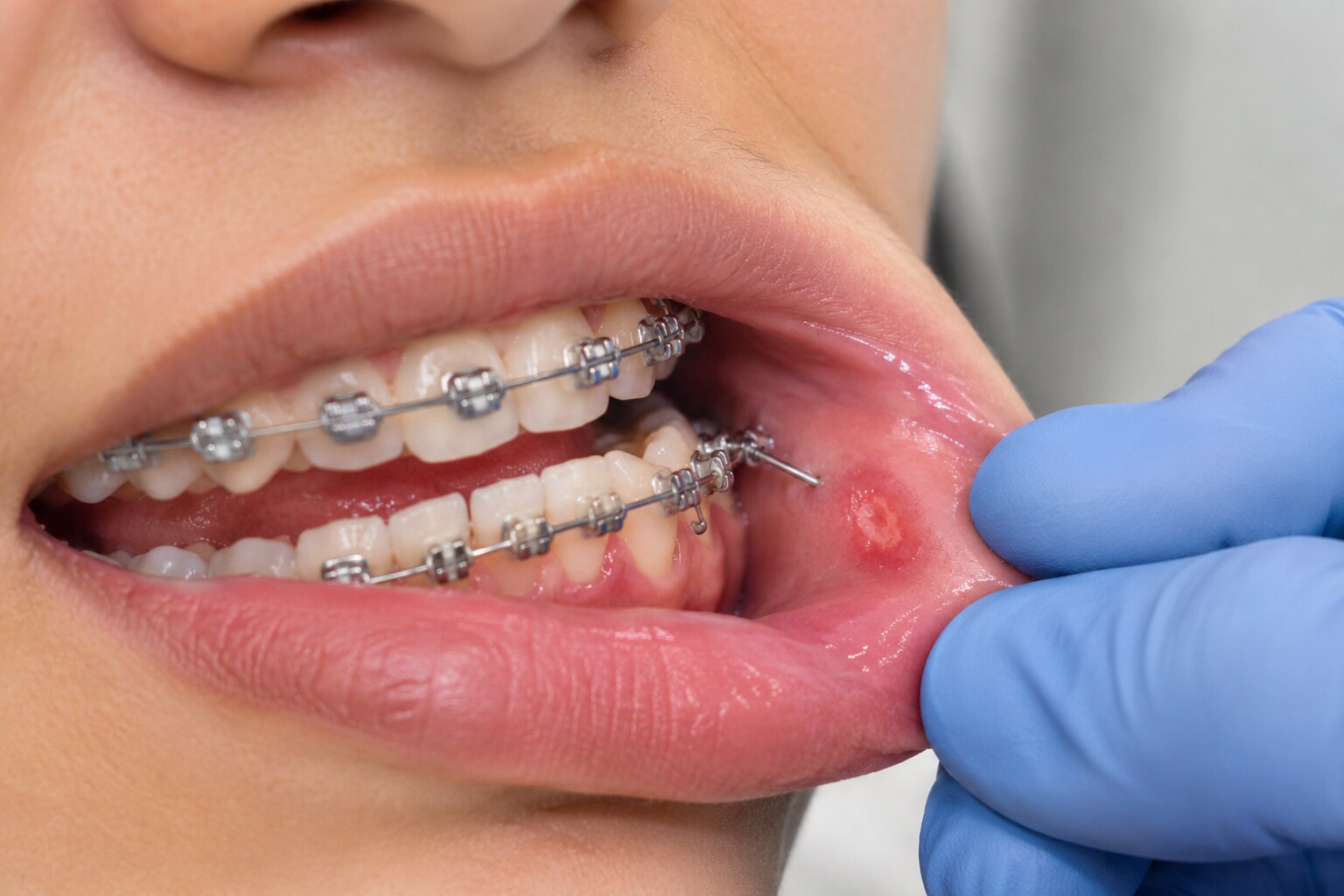
A new brace or recent adjustment usually causes broad tenderness for a few days, especially when chewing, but it should gradually ease. A sharp spot that repeatedly catches the same cheek, lip, tongue, or gum indicates mechanical damage, not ordinary soreness.
If you searched “braces cutting mouth dentist Dwarka,” inspect the area in a mirror and identify the contact point. Look for:
- A protruding or displaced archwire
- A loose bracket rotating on the tooth
- A rough or displaced band edge
- An elastic pressing into the cheek or gum
- A new appliance rubbing one fixed spot
A small ulcer that matches one of these points, keeps reopening, or bleeds when the component moves needs the treating orthodontist’s attention. Do not wait for the next routine adjustment if the injury is worsening.
For short-term protection, rinse with half a teaspoon of salt in a glass of warm water and spit it out. Dry the bracket or wire gently with clean gauze, then press orthodontic wax over the sharp area and choose soft foods.
Do not cut the wire with household scissors, pull off a bracket, bend the archwire aggressively, or place aspirin on the sore. Covering the point reduces friction; it does not repair a loose or displaced component.
Use wax, salt water, and soft foods for short-term relief
Rinse the sore gently, cover the rubbing point, and reduce contact while the tissue heals. These measures relieve friction; they do not repair a bracket or wire that remains sharp. If you searched “braces sores in mouth dwarka,” start with this short-term routine:
- Mix half a teaspoon of salt into a glass of warm water. Swish it around the sore, then spit it out; do not swallow the solution.
- Wash your hands, dry the bracket or wire with clean gauze or tissue, and press a small piece of orthodontic wax over the sharp area. Replace the wax after eating or brushing.
- Choose soft foods such as yoghurt, eggs, porridge, rice, or mashed vegetables. Chew on the opposite side until the rubbing settles.
- Avoid hard or sharp foods, chilli, citrus, vinegar, and very hot food and drinks, which can scrape or sting the ulcer.
Wax protects the cheek or lip only while it stays in place. Do not cut the wire with household scissors, pull off a bracket, bend the archwire forcefully, or put aspirin directly on the sore; these actions can worsen the injury or burn the tissue.
Antibiotics do not remove mechanical irritation and are not a default treatment for a friction ulcer. If the sore keeps reopening after wax and soft foods, arrange an orthodontic review rather than repeatedly treating the symptom.
What to do with a poking wire, loose bracket, band, or elastic
Cover a sharp wire end or displaced bracket with orthodontic wax, but arrange a repair if it keeps moving or injures the same spot. Rinse with warm salt water, wash your hands, and dry the bracket or wire end with clean gauze before pressing wax over it. Choose soft foods until the tissue settles.
Use this temporary checklist while waiting for orthodontic advice:
- Poking archwire: cover the end with wax. Do not cut it with household scissors, pull it out, or bend the archwire aggressively; those actions can worsen the injury or disrupt tooth movement.
- Loose bracket: do not remove it. Cover the bracket with wax and tell the orthodontist that it has detached or is sliding on the wire.
- Loose band: avoid chewing hard or sticky foods and do not push the band back with a finger. It needs orthodontic assessment and cementing or replacement.
- Displaced elastic: do not reposition or replace it unless your orthodontist has given you exact instructions. Report where it moved and whether it is cutting the cheek, lip, tongue, or gum.
Contact the orthodontist promptly if wax will not stay in place, bleeding continues, or the appliance is loose. Send a close-up photograph and state the injury’s site, duration, bleeding, and swelling.
A braces irritation treatment Dwarka search does not mean antibiotics: friction ulcers need removal of the mechanical cause, while antibiotics require a clinician’s diagnosis of infection.
Decide whether to call the orthodontist today or wait
If the same spot is being cut repeatedly, contact your orthodontist today rather than waiting for the next adjustment. Call promptly when wax will not stay in place, a bracket or band is loose, or a wire keeps poking your cheek, lip, tongue, or gum.
| Symptom or finding | Correct response | Why it matters |
|---|---|---|
| Repeated cut, ulcer, or bleeding point from a wire or bracket; loose appliance; wax not staying in place | Same-day orthodontist contact | The component needs repositioning, repair, or adjustment; covering it only hides the cause |
| Increasing tooth or gum pain with facial swelling, fever, pus, or difficulty opening your mouth | Same-day urgent dental assessment | These signs can indicate infection or a problem beyond ordinary brace soreness |
| Trouble breathing or swallowing, rapidly spreading swelling, uncontrolled bleeding, or a serious blow to the face or jaw | Emergency care now | Airway problems, major bleeding, and facial injuries cannot wait for an orthodontic appointment |
A new appliance that causes mild tenderness for a few days can usually be monitored with wax, warm salt-water rinses, and soft foods. Pain that worsens instead of settling, or an ulcer that lasts more than three weeks, needs dental or medical assessment.
When you call, give the exact location, when the injury started, bleeding or swelling details, and a close-up photograph. If you need an orthodontist for painful braces Dwarka, Dr Pooja Dental & Implant Centre can help distinguish an appliance repair from a dental emergency.
Related service
Braces Braces Unlock your best smile with professional Orthodontic Braces at Dr. Pooja Dental & Implant Centre. |
Keep the area clean and prevent the same sore from returning
While you wait for an orthodontic review, keep the sore clean rather than avoiding the area. Brush gently around each bracket and along the gumline with fluoride toothpaste, then use a small orthodontic or interdental brush under the wire. Plaque trapped around braces increases the risk of decay, white-spot lesions, and gum inflammation.
Until the sharp area is repaired:
- Rinse with half a teaspoon of salt dissolved in a glass of warm water, then spit it out. Repeat for short-term relief.
- Dry the bracket or wire with clean gauze and press orthodontic wax over the rubbing point.
- Choose soft foods and avoid crusty, spicy, or acidic foods that scrape the ulcer.
- Take pain relief only as the product label and your medical conditions allow. Never place aspirin on the sore; it can burn oral tissue, and children or teenagers should not take aspirin unless a clinician advises it.
A rubbing ulcer should begin improving after the source of trauma is removed. Arrange separate dental or medical assessment if it lasts beyond three weeks, becomes unusually large or painful, or keeps returning.
Antibiotics are not routine braces irritation treatment dwarka: they do not remove a sharp component and belong only when a qualified clinician identifies an infection. For braces sores in mouth dwarka, persistent lesions deserve examination rather than indefinite home care.
Frequently asked questions
How can I find what is cutting my cheek, lip, tongue, or gum?
Run your tongue carefully over the sore area and inspect the braces in a mirror. Look for a sharp wire end, loose bracket, band edge, or elastic hook catching the tissue.
What can I use for braces sores in my mouth?
Cover the irritating brace with orthodontic wax, rinse with warm salt water, and eat soft foods while the tissue heals. Keep brushing gently around the sore.
What should I do about a poking wire or loose bracket?
Cover a poking wire with wax and contact your orthodontist. Do not cut the wire or pull off a loose bracket, band, or elastic unless your orthodontist gives specific instructions.
When should I call an orthodontist for painful braces?
Call today if bleeding continues, pain is severe, a wire is embedded, a bracket or band is loose, or swelling interferes with eating or swallowing. Contact the clinic if the same sore keeps returning.
Keywords