A crown and a veneer are not interchangeable: one covers a tooth more extensively, while the other usually bonds to its visible front surface. Knowing the examination, preparation, temporary, fitting and bonding stages helps you compare treatment plans, recognise delays and ask a Dwarka dental clinic the right questions before agreeing to treatment.
Key takeaways
- Choose a crown for protection; choose a veneer for front-surface cosmetic changes.
- Ask whether your tooth needs a crown, veneer, bridge or implant.
- Confirm the number of appointments, temporary restoration and expected sensitivity.
- Request a written plan covering materials, cementation, bonding and follow-up care.
Which restoration fits your tooth: crown, veneer, bridge or implant?
The dentist chooses a crown when a tooth needs protection and a veneer when its front surface mainly needs cosmetic change.
The crown and veneer treatment process in Dwarka begins with an examination of decay, cracks, existing fillings, enamel, gums and bite, supported by photographs, scans and dental radiographs when indicated—not by preferred shade or shape alone.
| Option | What it covers or replaces | When it applies |
|---|---|---|
| Crown | Most or all of the visible tooth | A weakened, fractured, heavily filled, substantially decayed or root-canal-treated tooth |
| Veneer | A thin layer bonded mainly to the front surface | Selected stains, minor chips, small gaps or shape changes with adequate enamel and manageable bite forces |
| Bridge | One or more missing teeth, supported by neighbouring teeth | When an absent tooth must be replaced without placing an implant; supporting teeth require careful assessment |
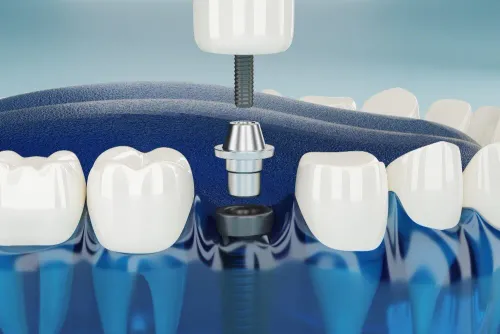
| Implant | A titanium fixture in the jaw, topped by an abutment and crown | When a missing tooth needs an independent replacement and the bone, gums and health support surgery |
A veneer preserves more natural structure, but it cannot reliably strengthen a badly cracked or weakened tooth. A crown covers more extensively and can protect remaining walls, though it requires greater preparation and can develop margin decay or bite discomfort.
The crown and veneer procedure also differs in its risks: veneers can chip or debond, while crowns can loosen or fracture. Root-canal treatment is not automatic for a crown; symptoms, examination and radiographs decide whether the pulp needs treatment.
What happens during crown treatment from examination to cementation?
The first appointment establishes whether the tooth can support a crown. The dentist examines decay, cracks, existing fillings, gums and bite, then takes photographs, scans and dental X-rays when indicated. This diagnostic stage is essential to the crown and veneer procedure; a crown does not automatically mean you need root-canal treatment.
1. The dentist removes decay or a failing filling and gives local anaesthetic before reshaping the tooth. Enough enamel and dentine are reduced to create space for the crown and a clear margin near the gum.
2. An impression or digital scan records the prepared tooth, neighbouring teeth and your bite. The dentist selects the planned crown material and shade, then sends the records to a laboratory or in-house milling system.
3. A temporary crown covers the prepared tooth while the definitive crown is made. It protects the tooth and lets you test speaking and chewing, but avoid sticky foods that can dislodge it.
4. At the fitting appointment, the dentist places the permanent crown without cement first. They check the margin, contacts with adjacent teeth, colour, shape and bite, then adjust any high spot.
5. After you approve the fit, the tooth is cleaned and the crown is permanently cemented or bonded. The dentist removes excess cement and checks your bite again.
Short-lived cold or biting sensitivity can follow preparation. Persistent, spontaneous or worsening pain needs reassessment rather than being treated as a normal part of what happens during crown treatment.
What happens during veneer treatment from smile design to bonding?
A veneer plan begins with healthy gums, enough enamel and a bite that will not overload the restoration. The dentist examines decay, cracks, worn enamel and existing fillings, then uses photographs, scans and dental X-rays when indicated. Preferred colour or shape alone cannot determine suitability.
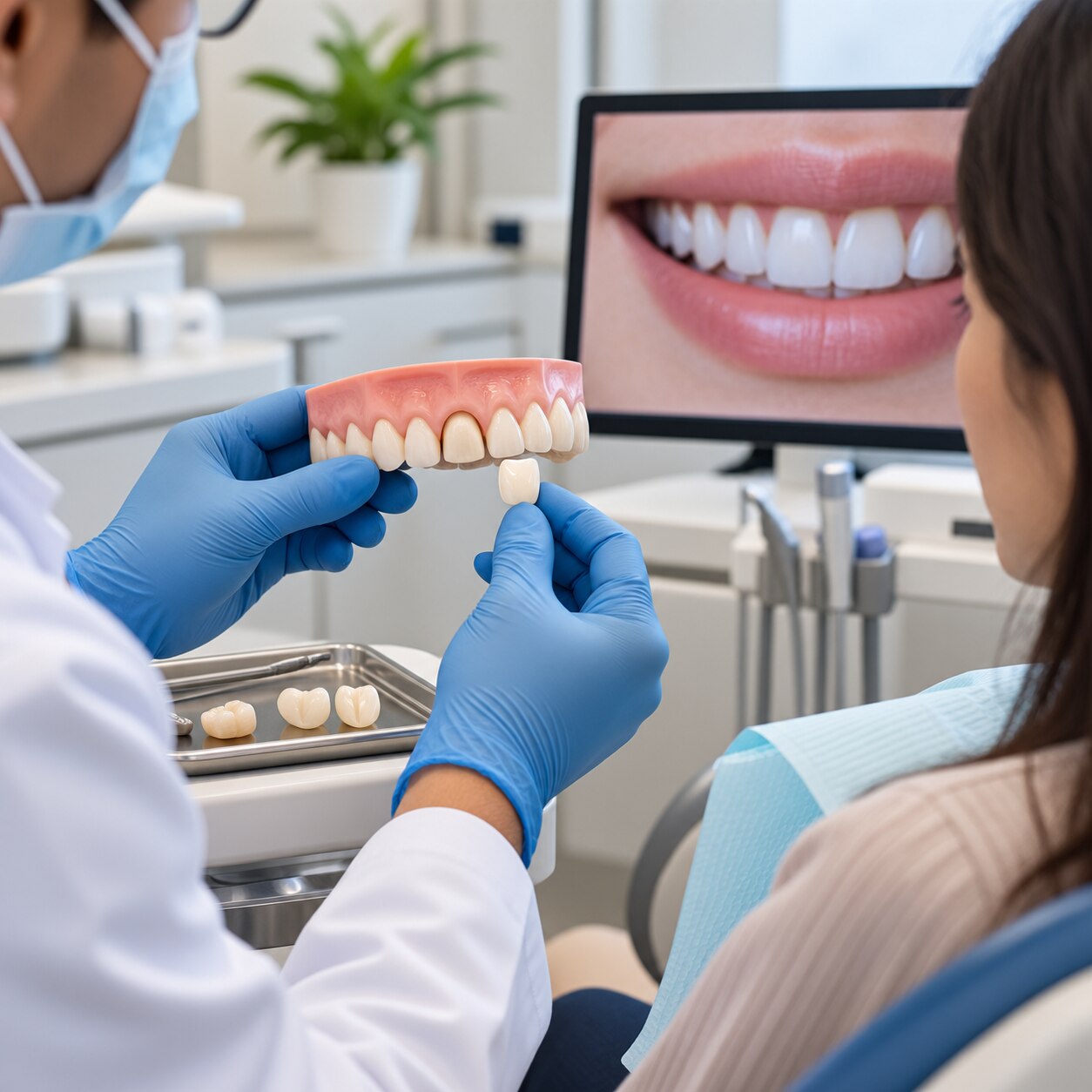
1. Smile design sets the target. Your dentist discusses tooth length, width, symmetry and how much tooth shows when you speak and smile. A digital preview, photograph or trial mock-up helps you assess the proposed shape before preparation.
2. Shade selection considers neighbouring teeth, skin tone, lighting and the chosen ceramic. The dentist records the shade before teeth dehydrate, because dried enamel appears temporarily lighter.
3. The enamel is assessed and, if required, a thin layer is prepared to create space and a reliable bonding surface. Removing excessive enamel risks sensitivity and leaves less natural structure.
4. An impression or digital scan records the prepared tooth and surrounding teeth. Provisional veneers can protect the surface while the laboratory makes the final restoration.
5. At the try-in, the dentist checks colour, margins, thickness, contacts, pronunciation and your bite. You can review the shape before approval; adjustments are easier before bonding.
6. After isolation from saliva, the enamel is etched or conditioned. The veneer is treated, coated with dental resin cement, seated precisely, excess cement is removed, and the resin is light-cured before the bite is checked again. That is what happens during veneer treatment when the tooth is suitable for a bonded cosmetic restoration.
What will you feel, and how long can the crown or veneer process take?
A straightforward crown or veneer process usually takes two appointments separated by several days to about two weeks. Same-day treatment is possible when the clinic has in-house CAD/CAM equipment, but laboratory-made restorations need fabrication time.
1. During preparation, local anaesthetic keeps the tooth comfortable. You may feel pressure, vibration and water from the handpiece, not sharp pain. Veneers need little or no reduction when enamel is adequate; crowns require more extensive shaping.
2. The dentist records the prepared tooth with a digital scan or impression. The scan is painless, though you must keep still while the camera moves around your teeth.
3. A temporary crown protects the tooth, maintains neighbouring contacts and lets you test its shape and bite. Temporary veneers may be used when the final design needs laboratory work. Avoid sticky foods, and contact the clinic if one loosens or comes off.
4. At fitting, the restoration is tried in and checked for colour, margins, contacts and bite. A veneer is conditioned and bonded with resin cement; a crown is cemented after the final adjustments. Pressure or cold sensitivity can last briefly. Persistent, spontaneous or worsening pain needs reassessment.
Completion can be delayed by gum inflammation, decay, cracks, insufficient tooth structure, an inaccurate scan, laboratory remakes or bite adjustments. Clenching, grinding and a change in shade or shape can also require design changes. Ask about the expected schedule when comparing crowns and veneers dwarka clinics.
The crown and veneer procedure should not be rushed to meet a date.
What should you ask a Dwarka clinic before accepting the treatment plan?
A treatment plan should name the problem, not just the desired smile. For crowns and veneers in Dwarka, ask what the examination found: decay, cracks, remaining enamel or tooth structure, gum health and bite forces. Confirm that photographs, digital scans and dental radiographs, when indicated, support the plan.
The crown and veneer treatment process in dwarka should not begin with shade selection alone.
Ask the clinic to record:
- Which material is proposed—lithium disilicate, zirconia, porcelain-fused-to-metal or composite—and how much tooth structure will be removed?
- How will the bite be checked? Ask about mounted models or digital records, articulating-paper checks, a provisional restoration and adjustments at try-in.
- What happens if a temporary crown loosens, the veneer chips or pain worsens? Confirm the emergency contact, response time and after-hours instructions. Dr Pooja Dental & Implant Centre should explain this before preparation.
- Which cleaning method, review schedule and night-guard assessment apply? Ask about replacement risks from grinding, decay, gum disease or bonding failure.
| Restoration | Diagnosis to confirm | Maintenance question |
|---|---|---|
| Crown | Weakened, cracked or heavily restored tooth | Can the margin be cleaned and checked? |
| Veneer | Adequate enamel and a suitable cosmetic bite | What happens if bonding fails or enamel is insufficient? |
Persistent, spontaneous or worsening pain needs reassessment, not reassurance that it is normal.
Related service
Crowns & Veneers Restore the beauty and strength of your smile with custom-crafted Crowns and Veneers at Dr. Pooja Dental & Implant Centre. View service → |
Frequently asked questions
Which restoration fits your tooth: crown, veneer, bridge or implant?
A crown covers and protects a weakened tooth, while a veneer covers its front surface for cosmetic change. A bridge replaces a missing tooth using neighbouring teeth or implants for support, while an implant replaces the tooth root and supports a crown.
What happens during crown treatment from examination to cementation?
The dentist examines the tooth, takes images or impressions, removes damaged or decayed tissue, prepares the tooth, records its shape and bite, and places a temporary crown when needed. After checking the permanent crown’s fit, colour and bite, the dentist cements it.
What happens during veneer treatment from smile design to bonding?
The dentist assesses your enamel, bite and smile goals, plans the shape and shade, and may use photographs, scans or a mock-up. The tooth receives minimal preparation when required; the veneer is tried in, adjusted, treated with dental adhesive and bonded with resin cement.
What will you feel, and how long can crown or veneer treatment take?
Local anaesthetic can prevent pain during tooth preparation. You may feel pressure, vibration or temporary sensitivity afterward. Crowns often require preparation followed by a separate fitting appointment, while veneers may need one or more visits depending on planning, laboratory fabrication and adjustments.
What should you ask a Dwarka clinic before accepting the treatment plan?
Ask which restoration is recommended and why, how much healthy tooth will be removed, which material will be used, how many visits are needed, what temporary restoration you will receive, how the bite will be checked, and what follow-up care is included.
Keywords